
You may not be familiar with the best ways to prepare yourself for self-defense. We'll be discussing the Mental and Physical preparations you should have. We'll also talk about ways you can protect yourself. These are just a few of the ways that you can prepare. It doesn't matter what age you are, self-defense awareness techniques can be learned at any stage. Have a look.
Self-defense awareness
Self-defense awareness is a valuable skill, no matter how experienced or new you are. Self-defense awareness involves being aware of the potential violence and planning accordingly. This awareness does not mean that you should be suspicious. This awareness simply means that you should be able to understand and take action if needed. You can achieve self-defense awareness by becoming more aware of the situation around you and developing awareness in yourself.
A SAFE class is available to help you learn the different methods of self-defense. You will learn basics techniques like the bear hug and the palm strike. For physical self-defense, it is important to practice the techniques repeatedly. Alexandra Gordon-Smith a junior studying English learned that self-defense awareness helps her feel safe when she commutes to campus. She felt more confident having learned basic self defense techniques through SAFE.
Mental preparation to self-defense
While self-defense is essential to learning the basics and techniques of a Martial Art, it is equally important that the mind is trained. Knowing your body's response to threats will make you more prepared to react in a safe manner. You must have a positive attitude to be able react to danger. The ability to manage fear and stress can be a life-saving skill.

You need to believe that you are the strongest person on the planet and that no one can take advantage of you. If someone is trying to pursue you, they will look for weakness in your determination to resist. Mental preparation is key. Practice can help you learn to say "no" and it will compliment your self-defense training. These are some tips to help you learn how to say "no".
Self-defense: Physical preparation
Do not look at your phone while you're walking. Instead, keep your keys close at hand. Ask yourself what makes it feel unsafe. If you have a relationship with the person, it is important to remain polite and verbal. If they are aggressive or intimidating, let them know that you don't want your presence around them. Respect others' boundaries. A basic knowledge of physical defense awareness is essential to ensure that you are in the best position for your defense.
While situational awareness is a great asset to your safety, it will be useless if you don't know what to look for. Knowing what to look out for in order to improve your self-defense skills is important. Learn to recognize these signals and how to pick them up. This will give yourself an edge when you need to defend your self.
Self-defense techniques
For many situations, self defense awareness is vital. The first step in self-defense awareness is to pay attention to your surroundings and to the people around you. The best way to protect yourself is to look people in their eyes. Even though it might be uncomfortable for some to look at other people, it is important not to forget that a potential attacker would identify you from a crowd. This awareness is crucial for recognizing suspicious behavior and precarious actions.
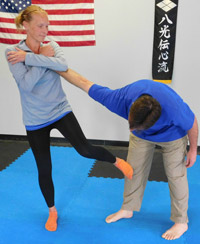
You need to know what your weaknesses are before the attacker starts to choke you. The most common attacks target the eyes, nose, throat, solar plexus, groin, and neck. These attacks can be prevented by knowing the right move. There are various self-defense techniques for each of these parts. Below are some basics techniques to help you defend yourself in danger situations.
FAQ
What is the best canned food for survival and what are your top picks?
Not all canned food is healthy. It may also depend on what you are looking for. If you're looking for energy, you can go for beans. But, if protein is what you desire, you should choose meat.
High levels of vitamins, minerals and nutrition are important if you want to eat well.
What should you put in a bug-out kit?
A Bug Out bag (BOB), or a survival kit, is designed to allow you to survive 72 hours without food and water. This kit contains a first aid kit and a whistle, fire starter. A knife, flashlight, whistle. Matches, rope, matches. Handkerchief. Toilet paper. Hygiene items. Sunscreen, sunscreen, socks, gloves, gloves, emergency blanket. Energy bars, batteries.
Remember that you'll probably only use half the items in your BOB. Choose wisely.
What food should I buy to survive?
You need to think carefully about what you are buying because if you don't have enough water, then you won't survive long. The best thing to do is find a place with plenty of water and make sure you stock up on supplies.
There are two options when it comes to food: dried beans, rice, pasta or dehydrated food. Whatever you choose, make sure you store them properly, so you don't lose anything.
You might also be interested in freeze-dried foods. These are more expensive than regular food, but they last much longer.
Statistics
- A survey commissioned by National Geographic found that forty percent of Americans believed that stocking up on supplies or building a bomb shelter was a wiser investment than a 401(k). (newyorker.com)
- A gravel bike was the clear winner, receiving more than 90 percent of the votes. Background: This summer, we surveyed our readers about what they’d shove into a backpack if they were caught unprepared for the collapse of society. (inverse.com)
- In the first ten months of 2016, foreigners bought nearly fourteen hundred square miles of land in New Zealand, more than quadruple what they bought in the same period the previous year, according to the government. (newyorker.com)
External Links
How To
How to preserve food in a survival situation
It is best to dry food when it is in urgent need. Drying foods makes them last for longer and removes moisture. It also reduces bacteria growth.
Dried fruits can be used as snacks in emergencies and don't require cooking. Dried fruits are easy to transport and can be eaten as much as you like without worrying about weight gain.
While you can dry fruit at your home using a dehydrator and a sun oven, it's much more convenient to do so in a commercial setting. To dry any type of food, you could use a sun oven, such as meats, fish, vegetables and grains.
Airtightness is the most important aspect of food preservation. This prevents oxygen entering the container and spoiling it. The container can be sealed tight enough to prevent oxygen from entering the food.
If you do decide to add preservatives, try adding salt first. Salt helps prevent mold growth. Then, follow that with vinegar. Vinegar kills bad bacteria and stops mold growth.
To begin, you will need to chop up your food into small bits. Either a pair of scissors or a sharp knife are acceptable. It is important to pack everything tightly so that air doesn't get in the container.
Place the food into a plastic bag. Seal the bag and leave it somewhere warm until it dries completely.
Once the food is dry, you can store it in a sealed container. You must be careful not to allow anything to touch the food.